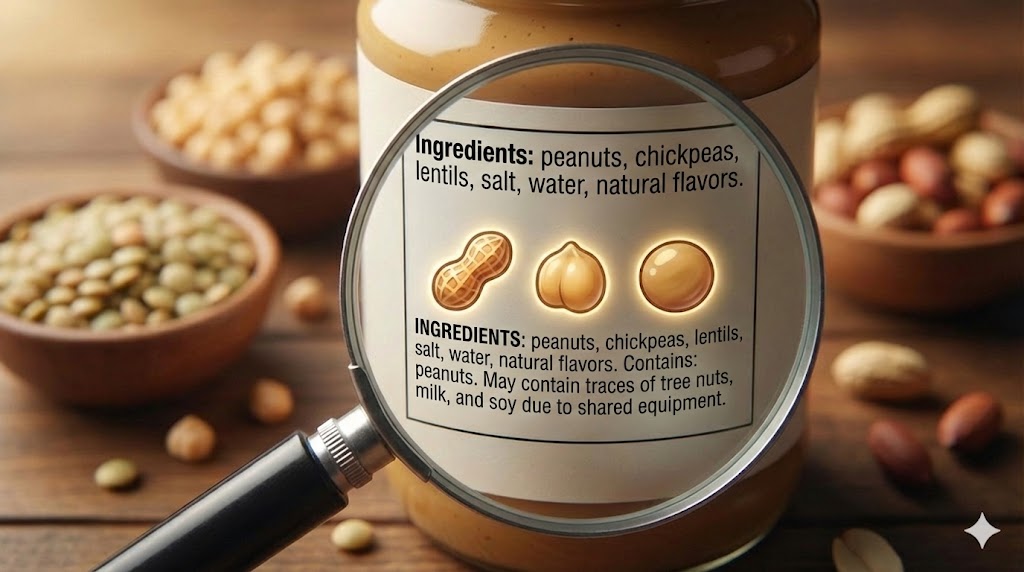
For many, the onset of food sensitivities doesn’t happen in childhood—it happens in the middle of adulthood. Developing a sudden reaction to tree nuts or legumes can feel like navigating a city without a map. This guide offers a candid look at how to identify hidden triggers and stay safe in a world of complex food labels.
The Legume Connection
It is a common misconception that peanuts are nuts; they are actually legumes. Because of this, individuals with peanut sensitivities often find they have cross-reactivity with other legumes, such as chickpeas, lentils, or soy.
- The Science: Proteins in these plants are structurally similar, which can confuse the immune system.
- The Challenge: Legumes are increasingly used as high-protein fillers in healthy pastas, gluten-free flours, and vegan meat substitutes.
Reading Between the Lines
Labels aren’t always as transparent as they should be. To protect yourself, look for these common hidden terms:
- “Natural Flavors”: Occasionally used for extracts that may contain nut oils.
- “Plant-Based Protein”: Often a blend that includes pea or chickpea protein.
- “May Contain”: These precautionary labels indicate shared equipment, which is a high risk for those with severe reactions.
 Health, Without the Filter
Leave a comment